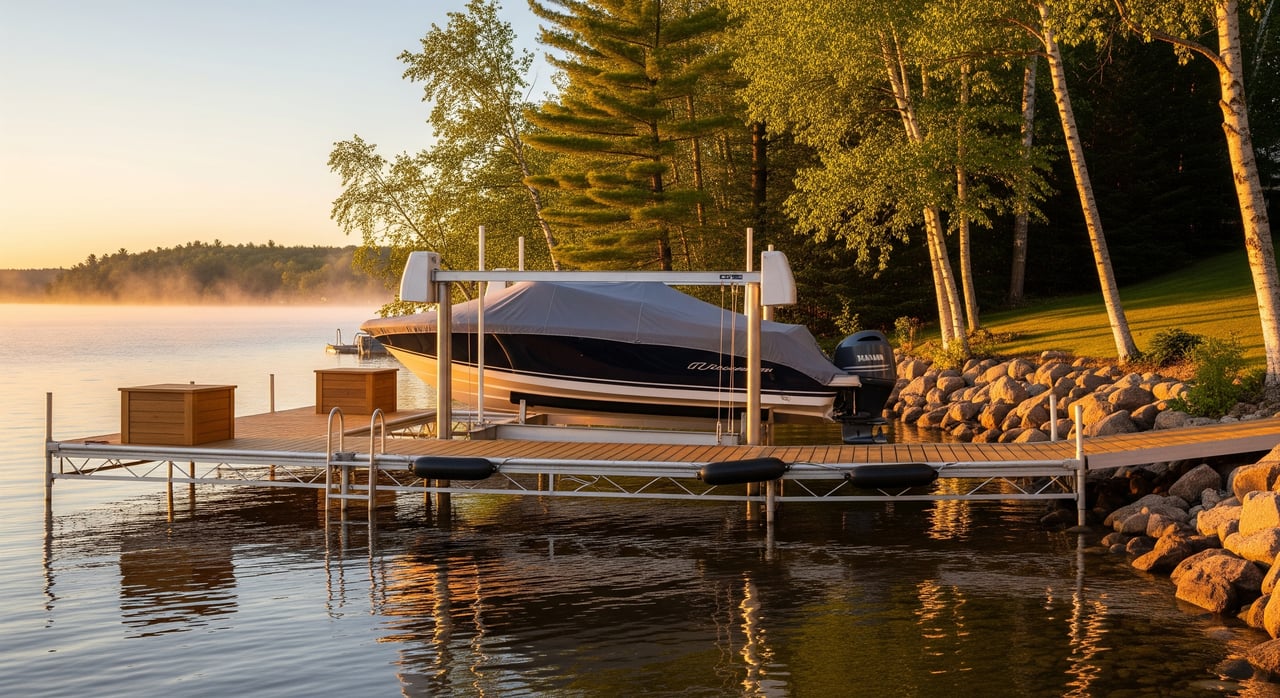
Pulling your dock and boat lift is part of lake life in Orr, but moving or storing that equipment the wrong way can spread aquatic invasive species and cause headaches with local rules. If you plan to shift a dock or lift between lakes, or you are prepping for winter, a little planning goes a long way. In this guide, you will learn the commonly required 21-day drying practice, how to clean and store your equipment, and what to document before you move anything. Let’s dive in.
The 21-day drying practice
Many Minnesota lake groups and local programs expect docks, lifts, swim platforms, and similar equipment to stay completely out of the water for 21 consecutive days before they are placed in a different lake. The goal is simple: let any plants, mussel larvae, snails, or other organisms die off so you are not carrying them to a new waterbody.
This 21-day window is a conservative, widely adopted practice across northern Minnesota. It lines up with research that shows many aquatic invasive species cannot survive extended drying. In Orr and greater St. Louis County, local lake associations often follow this practice to reduce risk.
Keep in mind that rules and enforcement vary. Some places treat 21 days as a firm requirement. Others allow a professional decontamination or inspection instead. Always check current Minnesota DNR guidance, St. Louis County rules, and your lake association before you move equipment.
What is required around Orr
Orr sits in northern St. Louis County, where short summers and early freeze-ups shape your timeline. Plan removal early and build in enough time for drying if you may move equipment to another lake.
Local programs may require one of the following before you place a dock or lift in a new lake:
- 21 consecutive days completely out of the water and dry.
- A documented professional decontamination, such as hot water or steam cleaning done to accepted standards.
- An inspection and certificate from an authorized aquatic invasive species inspector.
Penalties and checks vary by jurisdiction. You may encounter lake association monitors, county staff, or DNR conservation officers. When in doubt, confirm with the Minnesota DNR Aquatic Invasive Species Program, St. Louis County environmental or shoreland offices, and your specific lake association.
Removal checklist before freeze-up
Removing your dock and lift safely protects your gear and the lake. Use this step-by-step list:
- Plan and prep
- Walk through your setup and inventory hardware, connectors, and flotation components.
- Take photos and label parts to make spring reassembly easier.
- Coordinate with neighbors for shared entries or community docks.
- Safety first
- Use proper lifting gear and stable shore anchors. Get help for heavy sections.
- Follow manufacturer instructions for lift removal. If your lift is hydraulic or electric, disconnect power, remove batteries, and secure control boxes.
- Minimize AIS transfer
- Bring sections up to shore and work above the high-water line.
- Manually remove all visible plants, algae, mud, and snails. Use brushes or scrapers to reach joints, bolts, and seams.
- Bag removed material and put it in the trash. Do not return anything to the lake or compost.
- Flotation checks
- Inspect foam blocks, barrels, and enclosed cavities for trapped moisture or plant fragments.
- Drain and dry flotation components as needed.
Cleaning and decontamination options
Start with a thorough manual clean. Focus on places that stay moist or shaded, like guide tubes, bolt pockets, and flotation cavities. Then choose one of these paths before moving to a different waterbody:
- Drying for 21 days: Keep the entire dock or lift completely dry and off the ground. This is the most widely accepted approach.
- Professional hot water or steam decontamination: Many local programs accept documented decontamination performed to accepted temperatures and pressures. Save receipts or certificates.
- Inspection and documentation: Some associations allow an inspector’s certificate showing the equipment is free of visible invasive species.
If you cannot access every tight space or you suspect trapped moisture, extend drying time or arrange a professional decontamination. Do not move equipment until you are certain it is clean and dry.
What “completely dry” means
Completely dry means more than drip-dry. It means no visible water, slime, plant fragments, or moisture in cavities. Porous surfaces and shaded areas can hold moisture longer, so allow extra time or use decontamination.
A good rule: elevate sections on blocks, keep them out of rain and snow when possible, and circulate air through enclosed spaces. Dated photos of the setup help prove the dry period.
Storage best practices for winter
Choosing the right storage setup protects your gear and the shoreline. Follow these tips:
- Location: Store on private property above the ordinary high water line, or use an approved storage yard. Avoid wetlands and places where runoff could return to the lake.
- Support: Use cribbing or blocks to keep frames straight and off the ground. Stack panels flat and uniformly unless your manufacturer recommends storing frames on edge.
- Weather and security: Strap or tie down sections against wind. Indoor storage reduces corrosion and theft risk, but outdoor storage on blocks works if elevated and secured.
- Corrosion and care: Remove road grime or salt before storage. Lubricate moving parts on lifts if the manufacturer recommends it.
- Electrical and mechanical: Remove and store batteries indoors. Disconnect electrical connections, secure control boxes, and drain water from hydraulic or pump systems if required.
Moving a dock or lift to another lake
If you plan to move equipment between lakes, treat this like a compliance project. Here is a simple sequence:
- Clean thoroughly and remove all plants, mud, and debris.
- Complete either the 21 consecutive days of drying or a documented professional decontamination. Confirm which option is accepted by the destination lake’s association or local authority.
- Document your process with dated photos showing the equipment out of the water and dry, plus receipts or inspection certificates.
- Transport on a clean, dry trailer. Remove any plant fragments from bunks, straps, and wheel wells.
- At the destination, be prepared to show documentation if asked by access staff or the lake association.
Timing matters in northern Minnesota. If the season is closing and you cannot meet the dry-time window, plan to store your equipment and move it next season after completing the dry period or before a scheduled decontamination.
Documentation that proves compliance
Documentation protects you if questions come up at an access site or during a local check. Keep:
- Dated photos of the dock and lift fully out of the water, showing the setup on blocks or in indoor storage.
- Close-ups of known moisture traps, like flotation cavities or guide tubes.
- Receipts for any professional decontamination or inspection certificates.
- Photos of the trailer and tie-downs to show a clean, plant-free transport.
Store these files in a folder labeled by lake and season so they are easy to find next year.
Common mistakes to avoid
- Skipping hard-to-reach areas. Tight seams and shaded pockets are where organisms hang on.
- Counting partial days. The drying clock should reflect 21 consecutive days of being completely out of the water.
- Letting wash water run back to the lake. Capture and dispose of rinse water on land.
- Storing near water or in wetlands. Keep equipment above the ordinary high water line.
- Forgetting electrical winterization. Remove batteries and secure control boxes to avoid damage.
Local contacts to verify rules
Because enforcement and accepted alternatives vary, always verify current requirements with:
- Minnesota DNR Aquatic Invasive Species Program for statewide guidance on docks and lifts.
- St. Louis County environmental or shoreland zoning for local ordinances and storage location rules.
- Your lake association or township near Orr for lake-specific access policies and any required inspections.
If you are buying or selling a waterfront property, factor this timing into your closing and move plans. A little coordination up front prevents delays at the access.
Ready to plan your move
Whether you keep your dock on Lake Vermilion or move a lift to a different lake near Orr, following the 21-day dry practice or an approved decontamination protects our waters and keeps you on the right side of local rules. Build your timeline around removal, cleaning, drying, documentation, and storage, and you will be set for spring.
Have questions about local logistics when you buy or sell a lake place around Orr and Lake Vermilion? Talk with Vermilion Real Estate Services for local guidance as you plan your next move. Make your cabin dream a reality. Schedule a showing.
FAQs
Is the 21-day drying period a Minnesota law?
- The 21-day practice is widely adopted guidance and is required by many lake associations and some local ordinances. Check current Minnesota DNR, St. Louis County, and your lake association rules to confirm what applies to you.
Can I use hot water decontamination instead of waiting?
- In many places a documented professional decontamination, such as hot water or steam cleaning to accepted standards, is allowed in lieu of the 21 days. Confirm acceptability and documentation requirements with local authorities.
How do I prove my dock or lift is ready for a new lake?
- Keep dated photos showing the equipment fully out of the water and dry, plus receipts from decontamination and any inspection certificates. Bring them when you transport and launch.
What counts as “completely dry” for docks and lifts?
- No visible water, slime, plant fragments, or trapped moisture in cavities or flotation. Porous surfaces and shaded pockets need extra time, so elevate sections and allow airflow.
Who enforces AIS rules in the Orr area?
- Enforcement may involve Minnesota DNR conservation officers, St. Louis County personnel, or local lake associations, depending on the location and rule. Penalties vary by jurisdiction.